
Take a slow look around your kitchen. Plastic containers. Cling wrap. Paper towels. Synthetic sponges.
Most of us don’t notice how much waste we generate until the trash bin fills up.
Eco-Friendly Kitchen Swaps are simple, realistic changes that reduce plastic waste, support a zero-waste kitchen, and often save money over time. You don’t need a complete renovation. You just need better choices—made gradually and intentionally.
This guide is designed for beginners, intermediate, and sustainability enthusiasts worldwide who want practical, research-backed advice without guilt or hype.
Table of Contents
🌿 Before You Replace Everything, Read This
- The most sustainable item is the one you already own.
- You don’t need a zero‑waste kitchen overnight.
- Replace items only when they wear out.
- Glass and steel last longer than trendy eco alternatives.
What Are Eco-Friendly Kitchen Swaps?
Eco-Friendly Kitchen Swaps are replacements for disposable or plastic-heavy products with reusable, non-toxic, biodegradable, or low-impact alternatives.
Instead of:
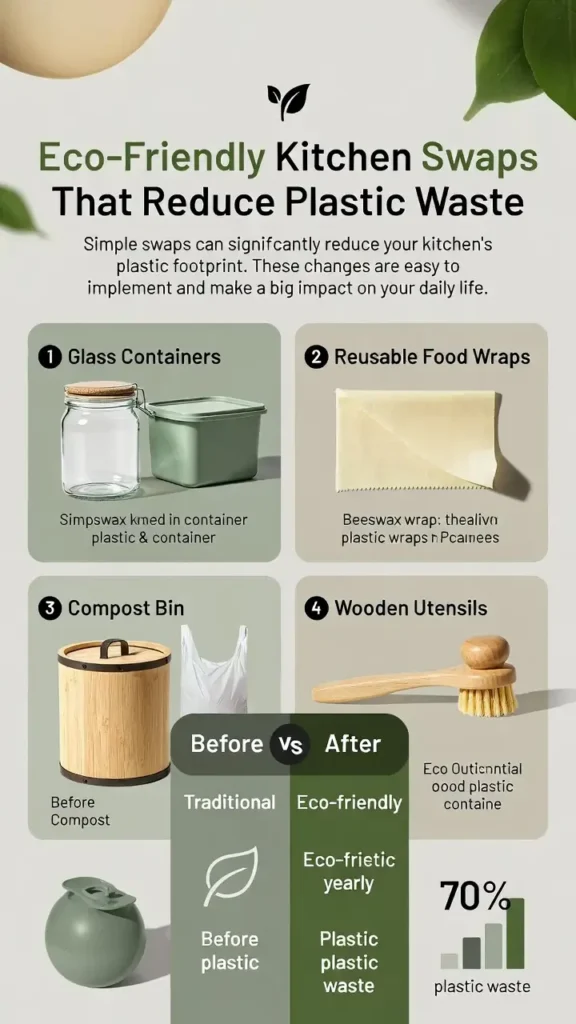
- Plastic food storage → choose glass containers
- Cling film → use beeswax wraps
- Paper towels → switch to washable cloth
- Synthetic sponges → compostable dish brushes
These sustainable kitchen swaps support:
- Plastic-free kitchen habits
- Low-waste cooking
- Non-toxic food storage
- Sustainable living at home
- Climate-conscious lifestyle choices
“Sustainability starts where daily habits live — and for most of us, that’s the kitchen.”
If you want to understand how plastic affects daily life beyond the kitchen, read our detailed guide on
👉 How to Start a Zero-Waste Lifestyle at Home
Simple habits that reduce waste without extreme changes.
Why Sustainable Kitchen Changes Matter
We often think global environmental problems are caused by factories, corporations, or governments. But daily household habits – especially in the kitchen – quietly shape demand, waste generation, and long-term environmental impact.
The kitchen is one of the most resource-intensive spaces in any home. From food packaging to cleaning supplies, it’s where plastic, water, energy, and disposable products intersect every single day.
Let’s break down why making sustainable kitchen changes is more meaningful than it seems.
🌍 1. Plastic Pollution Is Real
According to the United Nations Environment Programme (UNEP), more than 400 million tonnes of plastic are produced globally each year. A significant share of this plastic is used for packaging — especially food packaging, storage wraps, sachets, and takeaway containers.
What makes this concerning is not just production — it’s disposal. A large percentage of plastic packaging is designed for single use. It’s used for minutes but persists in the environment for decades or even centuries.
In a typical household kitchen, plastic shows up as:
- Food storage containers
- Cling film and zip bags
- Bottled cleaning products
- Packaged pantry goods
- Disposable cutlery or plates
Individually, these items seem harmless. Collectively, across millions of homes, they create enormous waste streams.
Sustainable kitchen changes reduce demand at the source. When households shift toward reusable containers and bulk storage, they reduce the need for new plastic production. Over time, that demand shift matters.
🧪 2. Health & Food Safety Concerns
Another reason sustainable kitchen choices matter is food safety and material exposure.
Some plastics may contain additives such as Bisphenol A (BPA), which has been studied for its potential effects on human health. While many countries regulate BPA levels or require BPA-free labeling, concerns remain about long-term exposure and the safety of heating food in certain plastics.
Reference:
National Institute of Environmental Health Sciences
It’s important not to exaggerate risk — regulatory bodies monitor food-contact materials carefully. However, many families prefer precautionary choices, especially for:
- Hot food storage
- Microwaving leftovers
- Baby and toddler meals
- Acidic foods like tomato sauces
Materials like borosilicate glass, stainless steel, and cast iron are generally considered stable, non-reactive, and long-lasting. Switching to these materials through thoughtful Eco-Friendly Kitchen Swaps is often about reducing uncertainty rather than responding to panic.
In simple terms: people feel more confident storing and heating food in durable, inert materials.
Curious about safer food storage materials? Explore our in-depth article:
👉 Are Plastic Food Containers Safe? Health Risks Explained
What research says about BPA, heat exposure, and better alternatives.
💰 3. Long-Term Cost Savings
Sustainability is often perceived as expensive. But when you look beyond the initial purchase price, the numbers tell a different story.
Let’s take a simple example:
A household using:
- 2 rolls of paper towels per week
- 1 roll of cling wrap per month
- 1 pack of zip bags per month
Over one year, that adds up to dozens of repeat purchases.
Reusable cloth towels, beeswax wraps, and durable containers may cost more upfront, but they last for years. After the first year, most of the recurring cost disappears.
It’s not about spending more — it’s about shifting from repetitive small purchases to durable, long-term solutions.
Sustainable kitchens are often more financially efficient in the long run.
🌱 4. Lower Carbon Footprint
Plastic production requires fossil fuels. Manufacturing disposable products consumes energy and water. Transportation adds further emissions.
The U.S. Environmental Protection Agency (EPA) emphasizes that the most effective waste strategy is not recycling — it’s reducing and reusing first.
When you reduce disposable kitchen items, you lower:
- Raw material extraction
- Manufacturing energy use
- Transportation emissions
- Landfill volume
Even small behavioral changes — like buying dry goods in bulk or composting food scraps — reduce your household’s carbon footprint.
This is where Eco-Friendly Kitchen Swaps become powerful. They target the “reduce” and “reuse” steps at the top of the waste hierarchy, which have greater environmental impact than recycling alone.
12 Powerful Eco-Friendly Kitchen Swaps You Can Start Today
1. Plastic Containers → Glass or Stainless Steel
- Durable
- Recyclable
- Non-reactive
- Oven & freezer safe (glass)
This is one of the most impactful Eco-Friendly Kitchen Swaps.
2. Cling Wrap → Beeswax Wraps or Silicone Lids
Reusable alternatives reduce single-use plastic waste dramatically.
Searchable keyword relevance:
- reusable food wraps
- plastic-free food storage
- beeswax wrap benefits
3. Paper Towels → Washable Cloth Towels
One roll of paper towels = recurring waste.
Reusable cloth towels last years.
4. Plastic Produce Bags → Cotton Mesh Bags
Perfect for grocery shopping and bulk food buying.
5. Bottled Cleaners → DIY Natural Cleaning Solutions
Mix:
- Vinegar
- Baking soda
- Lemon
Safer for surfaces and reduces plastic packaging.
6. Synthetic Sponges → Compostable Dish Brushes
Wooden brushes and plant-fiber scrubbers break down naturally.
7. Non-Stick Cookware → Cast Iron or Stainless Steel
Long lifespan. Fewer replacements. Better durability.
8. Plastic Cutting Boards → Bamboo or Wooden Boards
Naturally antibacterial properties when maintained properly.
9. Disposable Coffee Pods → Refillable Filters
Significant waste reduction for daily coffee drinkers.
10. Aluminum Foil → Reusable Baking Mats
Heat resistant and washable.
11. Bottled Water → Water Filter + Steel Bottle
Reduces single-use plastic significantly.
12. Food Waste → Compost Bin
Kitchen composting supports a true zero waste kitchen.
🔄 Quick Comparison Table
| Item | Conventional Option | Eco Alternative | Lifespan | Waste Impact |
|---|---|---|---|---|
| Food Storage | Plastic box | Glass container | 5–10+ yrs | Low |
| Wrap | Cling film | Beeswax wrap | 1–2 yrs | Very Low |
| Towels | Paper roll | Cotton cloth | 3–5 yrs | Minimal |
| Sponge | Plastic sponge | Compostable brush | 6–12 months | Biodegradable |
| Cookware | Non-stick | Cast iron | 10+ yrs | Long-term low |
Many Eco-Friendly Kitchen Swaps focus on durability over disposability.
📊 Waste Reduction Chart (Example Data)
(Example household of 3 – annual estimate)
| Swap | Monthly Plastic Reduced | Yearly Reduction |
|---|---|---|
| Reusable containers | 15 units | 180 |
| Cloth towels | 8 rolls | 96 rolls |
| Beeswax wraps | 10 sheets | 120 sheets |
| Refillable cleaners | 12 bottles | 144 bottles |
Even 3–4 Eco-Friendly Kitchen Swaps can prevent hundreds of disposable items yearly.
🛠 Step-by-Step Plan to Transition
Step 1: Audit Your Waste
Track what you throw away for 7 days.
Step 2: Identify Top 3 Waste Items
Usually:
- Plastic packaging
- Paper towels
- Food wraps
Step 3: Replace Gradually
Only switch when items wear out.
Step 4: Maintain & Reuse
Wash properly. Store correctly.
Step 5: Track Savings & Impact
Motivation increases when you see results.
Original Quote:
“The goal isn’t a perfect zero-waste kitchen — it’s a smarter one.”
✅ Best Practices
- Buy high-quality sustainable kitchen products
- Choose minimal packaging
- Support ethical eco-friendly brands
- Repair instead of replacing
❌ Common Mistakes
- Throwing usable items away immediately
- Buying trendy eco products without research
- Ignoring product durability
- Expecting instant zero waste results
🌍 Real-Life Example
A family in Toronto began with just four Eco-Friendly Kitchen Swaps:
- Glass containers
- Cloth towels
- Bulk pantry jars
- Compost bin
In one year:
- 60% reduction in visible plastic waste
- $300 saved on disposable products
- Improved awareness about food waste
They didn’t aim for perfection. They focused on consistency.
FAQs
1. What are the easiest Eco-Friendly Kitchen Swaps for beginners?
Start with reusable food storage containers, cloth towels, and composting. These provide noticeable waste reduction with minimal effort.
2. Are glass containers safer than plastic?
Glass is non-reactive and heat resistant. Many households prefer it for food storage longevity and recyclability.
3. Do Eco-Friendly Kitchen Swaps really save money?
Yes, especially over time. Reusable products reduce recurring purchases of disposable items.
4. How do I build a zero waste kitchen?
Focus on reducing single-use plastics, composting food scraps, buying in bulk, and choosing durable materials.
5. Are bamboo kitchen products sustainable?
Bamboo grows quickly and is biodegradable. Look for responsibly sourced products for best impact.
6. How much does it cost to switch?
Starter changes may cost $50–$150 depending on location. Gradual replacement minimizes upfront spending.
Start Small, Stay Consistent
Eco-Friendly Kitchen Swaps are not about trends or perfection. They are about smarter daily choices that reduce waste, support health, and lower long-term costs.
✅ Your 7-Day Action Checklist
- Audit kitchen waste
- Replace one plastic item
- Buy reusable produce bags
- Try natural cleaning solution
- Track progress
Small habits build a sustainable kitchen. And a sustainable kitchen builds a better future.
