
Everyday Items Harming the Environment are not found in factories — they’re found in your kitchen, your bathroom, and even your wardrobe.
Walk into your home right now.
Look around.
Your kitchen. Your bathroom. Your bedroom.
Everything looks normal, right?
But what if I told you that some of the most ordinary things in your house are silently harming the environment every single day?
The truth is — environmental damage doesn’t only come from factories or oil spills. It often starts inside our homes.
In 2026, sustainability is no longer a trend. It’s a responsibility.
And today, we’re uncovering 7 everyday items harming the environment that most people don’t even question.
Let’s begin.
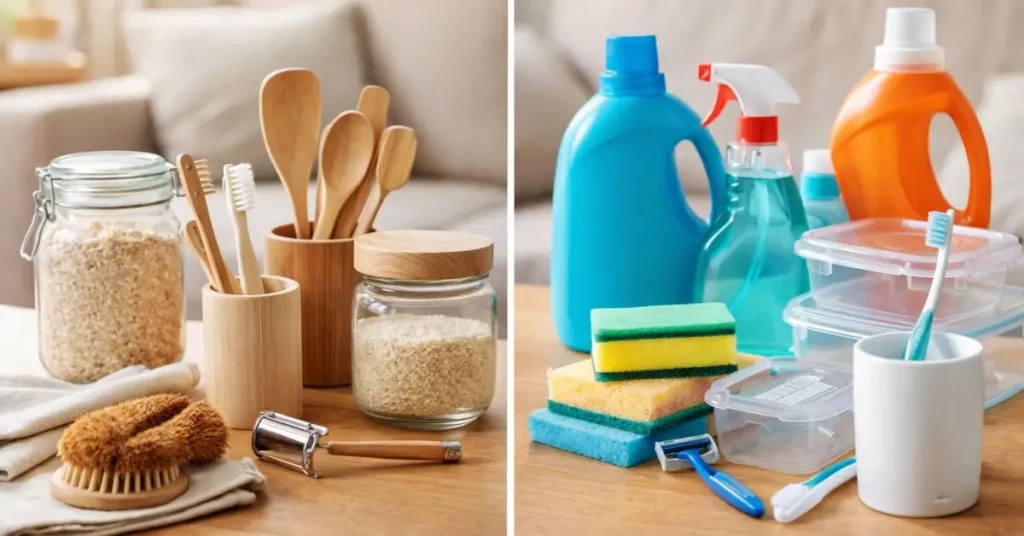
Table of Contents
7 Everyday Items Harming the Environment in Your Home
Many people don’t realize that everyday items harming the environment are often the most frequently used objects in their homes.
1️⃣ Plastic Toothbrush
That toothbrush you replace every 3 months?
It never really disappears.
Over 1 billion plastic toothbrushes are thrown away every year. They end up in landfills or oceans where they take hundreds of years to decompose.
According to plastic pollution research by UNEP, plastic waste is one of the fastest-growing environmental challenges worldwide.
Better Alternative:
Switch to bamboo or wooden toothbrushes.
They’re biodegradable, toxin-free, and align perfectly with a sustainable lifestyle.
2️⃣ Non-Stick Cookware (Teflon-Based)
Many non-stick pans contain synthetic coatings that release micro-particles and harmful chemicals when overheated.
These chemicals:
- Pollute air
- Contaminate water
- Harm wildlife
Better Alternative:
Cast iron, stainless steel, or wooden kitchen accessories.
Natural materials are safer for your health and the planet.
3️⃣ Plastic Food Storage Containers
We all have them.
They seem harmless — but plastic containers:
- Release microplastics
- Break down into toxic particles
- End up in landfills for decades
Heat + plastic = chemical leaching.
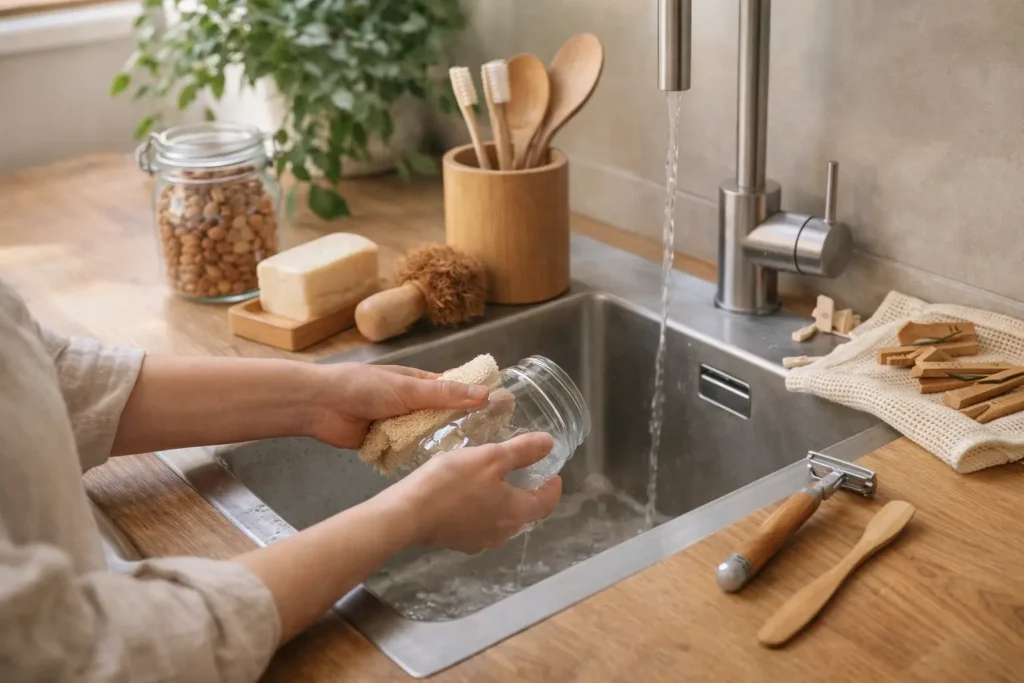
Smarter Swap:
Glass jars or wooden storage containers.
If you’re exploring eco-friendly kitchen upgrades, check out sustainable wooden alternatives here:
eco-friendly wooden kitchen products
4️⃣ Synthetic Cleaning Sponges
Bright colored kitchen sponges are made from petroleum-based plastic.
They:
- Shed microplastics
- Cannot be recycled
- Need frequent replacement
Eco Upgrade:
Natural loofah or coconut fiber scrubbers.
They decompose naturally and reduce plastic waste.
5️⃣ Disposable Razors
Cheap? Yes.
Convenient? Maybe.
Eco-friendly? Absolutely not.
Billions of disposable razors go to landfill every year.
They’re mixed-material plastic — impossible to recycle.
Sustainable Switch:
Reusable metal razor or wooden-handle grooming products.
Small change. Massive impact.
6️⃣ Fast Fashion Clothing
That “cheap trendy shirt”?
It may contain polyester — which is plastic.
Every wash releases microfibers into water systems. These tiny plastics enter oceans and even seafood.
Global reports including plastic waste statistics by OECD show that microplastics from household products are significantly contributing to ocean pollution.
Sustainable Choice:
Natural fabrics like cotton, linen, hemp.
Better quality. Longer life. Lower impact.
7️⃣ Plastic Décor & Home Accessories
Decor trends change quickly. Cheap plastic décor follows.
But these items:
- Crack easily
- Cannot be recycled
- Add to landfill waste
Smarter Alternative:
Wooden home décor.
Natural texture. Timeless style. Biodegradable.
If you want sustainable décor pieces crafted for eco-conscious homes, explore:
👉 sustainable wooden home décor
These everyday items harming the environment may seem small, but their long-term impact is massive.
📊 The Real Environmental Impact of Everyday Household Swaps
When we talk about everyday items harming the environment, the damage often feels invisible. But when measured annually, the numbers become powerful.
An average household that replaces common plastic items with sustainable alternatives can create a measurable environmental shift within just one year.
For example:
- Switching from plastic toothbrushes to bamboo versions
- Replacing synthetic sponges with natural scrubbers
- Using glass or wooden storage instead of plastic containers
- Choosing reusable razors over disposable ones
These small changes add up dramatically.
Below is a visual representation of the estimated yearly environmental impact per household when common plastic items are replaced with sustainable alternatives.
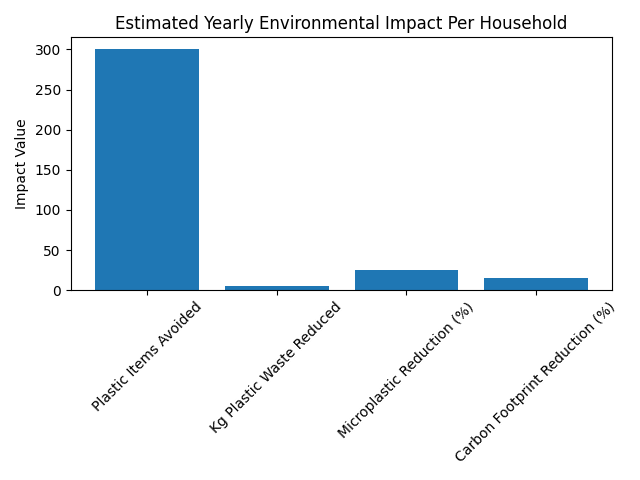
What this data shows is simple:
Small household decisions create large environmental outcomes.
Avoiding hundreds of plastic items per year reduces landfill pressure, lowers microplastic contamination in water systems, and decreases overall carbon footprint. Even a modest reduction in plastic waste per home can create massive collective impact when adopted by thousands of families.
This proves that replacing everyday items harming the environment is not symbolic — it is measurable and powerful.
🌱 Why This Matters in 2026
Gen Z and millennials are leading a sustainability movement.
Consumers now ask:
- Is this recyclable?
- Is this biodegradable?
- Is this safe for my health?
Eco-conscious homes are not just stylish — they are responsible.
And the shift starts with replacing everyday items harming the environment.
Why Wooden Products Are Gaining Popularity
Wood is:
- Renewable
- Durable
- Biodegradable
- Naturally aesthetic
- Non-toxic
Unlike plastic, wooden products don’t sit in landfills for centuries.
They age gracefully.
They decompose naturally.
They feel premium.
And most importantly — they align with conscious living.
🚀 How to Start (Without Overwhelming Yourself)
Don’t replace everything at once.
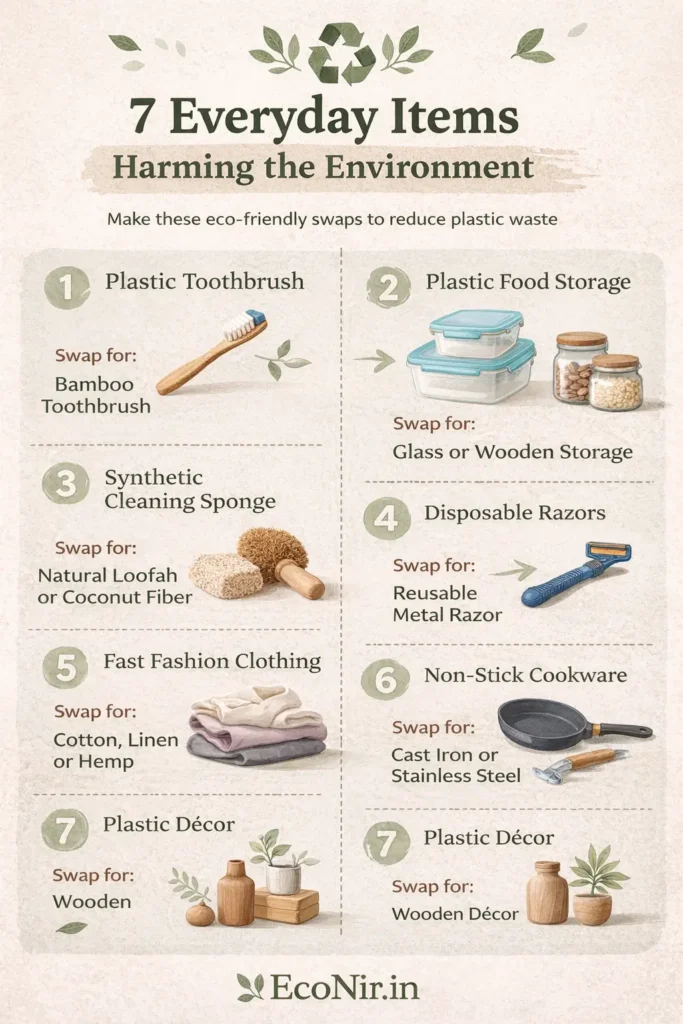
Start small:
- Week 1 → Replace toothbrush
- Week 2 → Replace kitchen storage
- Week 3 → Switch cleaning tools
- Week 4 → Upgrade décor
Sustainability is a journey, not a race.
FAQs❓
Let’s answer some common questions about everyday items harming the environment and how to replace them wisely.
1. Are everyday plastic items really that harmful?
Yes. Many everyday items release microplastics and toxic chemicals, contributing to pollution and health risks.
2. What is the easiest eco-friendly swap to start with?
Replacing plastic toothbrushes and kitchen storage containers is one of the simplest first steps.
3. Are wooden products truly sustainable?
Yes, when sourced responsibly, wooden products are renewable, biodegradable, and long-lasting.
4. How much plastic waste can a household reduce yearly?
By switching common plastic items, households can reduce several kilograms of plastic waste annually.
5. Is sustainable living expensive?
Not necessarily. Many eco-friendly products last longer, making them more cost-effective over time.
Becoming aware of everyday items harming the environment is the first step toward building a truly sustainable home.
🌿 Final Thoughts
The environment isn’t harmed by one big decision.
It’s harmed by millions of small, unconscious ones.
But the good news?
It can also be protected the same way.
Look around your home today.
Identify just one everyday item harming the environment.
Replace it.
That’s where real change begins.
And that’s how sustainable living becomes a lifestyle — not just a trend.