
A Practical, Real-Life Blueprint for a Greener, Healthier & Smarter Home 🌿
Sustainable living is no longer a “foreign concept” or something only environmental activists talk about.
For Indian families, sustainability is actually a return to our roots—using less, wasting nothing, respecting nature, and living mindfully.
But let’s be honest.
Most guides make sustainable living sound expensive, complicated, or unrealistic.
This guide is different.
This is a complete, no-nonsense Sustainable Living Guide for Indian Families—designed for middle-class homes, apartments, joint families, nuclear families, and even rented houses.
By the end of this article, you’ll feel:
- “Yes, I can actually do this”
- “Why didn’t anyone explain it this simply before?”
- “I don’t need another article on this topic”
Let’s begin.
Table of Contents
What Does Sustainable Living Really Mean for Indian Families?
Sustainable living means meeting today’s needs without damaging tomorrow’s future – for our children, our soil, our water, and our air.
For Indian households, it focuses on three simple ideas:
- Consume less, but better
- Reduce waste at home
- Choose natural, long-lasting alternatives
It’s not about being perfect.
It’s about making better daily choices—slowly and consistently.
Why Sustainable Living Matters More Than Ever in India
India is facing:
- Severe air pollution in cities
- Water shortages in many states
- Growing landfills and plastic waste
- Rising electricity bills and fuel costs
Sustainable living doesn’t just help the planet – it helps your family’s health and monthly budget.
According to a UNEP report, India generates over 3.5 million tonnes of plastic waste annually, much of it from households.
👉 Want to understand the global impact of household waste?
Explore this eye-opening resource by UNEP:
This helps put India’s household choices into a global perspective.
Pillars of Sustainable Living for Indian Homes
1. Sustainable Home Practices (Start Where You Live)
Your home is the best place to begin.
Simple steps:
- Use natural light during daytime
- Switch to LED bulbs
- Turn off appliances instead of leaving them on standby
- Choose wooden or steel furniture instead of plastic
Wooden products, when sourced responsibly, last longer and reduce plastic dependency.
👉 Learn why wood is a smarter eco-choice than plastic:
This explains sustainability from a product-life perspective.
2. Waste Reduction at Home (The Game Changer)
Most Indian homes can reduce 40–60% waste without any extra cost.
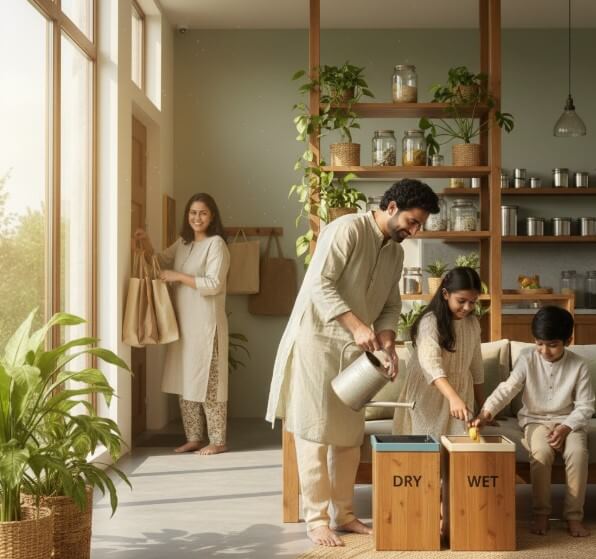
Do this first:
- Avoid single-use plastic packaging
- Separate wet and dry waste
- Compost kitchen waste (even in apartments)
Kitchen waste composting turns garbage into free organic fertilizer for plants.
👉 If you’re new to composting, this beginner-friendly guide helps:
Perfect for Indian climate and space conditions.
3. Eco-Friendly Lifestyle Choices (Daily Habits Matter)
Sustainability isn’t about big actions—it’s about daily habits.
Replace this → With this
- Plastic bags → Cloth or jute bags
- Plastic containers → Glass or steel
- Disposable wipes → Reusable cotton cloth
- Chemical cleaners → Natural cleaning solutions
These changes protect indoor air quality and reduce chemical exposure—especially important for children.
4. Sustainable Food Choices for Indian Families
Food is a powerful sustainability tool.
Indian households can easily:
- Buy seasonal, local vegetables
- Reduce food waste
- Store grains properly to avoid spoilage
- Grow basic herbs like tulsi, mint, coriander
Eating local reduces transport pollution and supports farmers.
👉 To understand sustainable food systems globally:
FAO explains how food choices affect climate and health.
5. Water Conservation at Home (Every Drop Counts)
India is a water-stressed country, yet most homes waste water unknowingly.
Practical water-saving ideas:
- Fix leaking taps immediately
- Reuse RO waste water for cleaning or plants
- Use buckets instead of showers
- Harvest rainwater if possible
Even small changes can save thousands of litres annually.
6. Energy-Efficient Living (Lower Bills, Lower Impact)
Energy efficiency is sustainability’s biggest bonus—you save money.
Smart upgrades:
- Star-rated appliances
- Solar lights for balconies or outdoors
- Pressure cookers instead of open boiling
- Air-drying clothes instead of dryers
These choices reduce electricity consumption and carbon footprint.
7. Sustainable Products for Indian Households
Choose products that:
- Last longer
- Are repairable
- Are biodegradable or recyclable
Eco-friendly doesn’t mean expensive – it means value for money over time.
At EcoNir, we believe sustainability should be practical, not preachy.
Teaching Sustainable Living to Children (Future-Proofing Your Family)
Children learn more from actions than words.
Involve them by:
- Letting them water plants
- Teaching waste segregation
- Explaining why plastic is harmful
- Encouraging reuse and repair
These habits shape responsible adults naturally.
Common Myths About Sustainable Living (Busted)
Myth: Sustainable living is costly
Truth: It saves money long-term
Myth: It needs big lifestyle changes
Truth: Small steps work best
Myth: One family can’t make a difference
Truth: Millions of small homes create big impact
A Simple 30-Day Sustainable Living Starter Plan
Week 1:
- Waste segregation
- Switch to cloth bags
Week 2:
- Compost kitchen waste
- Reduce plastic packaging
Week 3:
- Energy-saving habits
- Water conservation
Week 4:
- Replace one plastic product with a sustainable alternative
That’s it. No pressure. Just progress.
Final Thoughts: Sustainable Living Is Not a Trend – It’s a Responsibility
Sustainable living is not about being perfect.
It’s about being aware, intentional, and consistent.
For Indian families, it means:
- Healthier homes
- Lower expenses
- Cleaner surroundings
- A better future for children
🌱 Welcome to conscious living. Welcome to EcoNir.
FAQs
1. What is sustainable living for Indian families?
Sustainable living for Indian families means adopting daily habits that reduce waste, save natural resources, and protect the environment while keeping life simple and affordable. It includes using eco-friendly products, conserving water and energy, reducing plastic, and making mindful consumption choices at home.
2. Is sustainable living expensive in India?
No, sustainable living is not expensive. In fact, it often saves money over time. Simple steps like reducing electricity usage, avoiding single-use plastics, composting kitchen waste, and buying long-lasting products help lower monthly household expenses.
3. How can a middle-class Indian family start sustainable living?
A middle-class Indian family can start by:
Segregating wet and dry waste
Using cloth or jute bags
Switching to LED lights
Reducing water wastage
Choosing reusable and durable household products
These small steps create a big impact without changing the entire lifestyle.
4. What are the easiest eco-friendly habits to follow at home?
The easiest eco-friendly habits include turning off unused lights, carrying reusable shopping bags, avoiding disposable plastic items, composting food waste, and reusing containers. These habits fit naturally into everyday Indian home routines.
5. How can Indian families reduce plastic waste at home?
Indian families can reduce plastic waste by replacing single-use plastic with cloth bags, steel or glass containers, wooden products, and refillable items. Buying in bulk and choosing products with minimal packaging also helps reduce plastic consumption.
6. Is home composting possible in Indian apartments?
Yes, home composting is completely possible in Indian apartments. Small compost bins or balcony composters can handle kitchen waste like vegetable peels, fruit waste, and tea leaves without bad odor when done correctly.