
I didn’t start reducing plastic waste because I wanted to be perfect. I started because I was tired tired of seeing wrappers, broken plastic tools, and “just one more container” pile up in my kitchen.
One evening while taking out the trash, I noticed something clearly: most of our dry garbage wasn’t food it was plastic waste. And a lot of it came from small household items that kept breaking: scrubbers, clips, cheap spatulas, flimsy organizers.
So I tried something simple: I began switching a few everyday items to wooden products (and where needed, steel/glass). Not overnight. Not expensive. Just a slow experiment to see if it actually reduced plastic waste.
It did.
Table of Contents
Why I focused on plastic waste (not “zero waste”)
For many homes in India and globally, plastic waste grows quietly because it comes from:
- frequent replacements (cheap tools that don’t last)
- mixed-material items that are hard to recycle
- convenience packaging that enters without permission
Even when we try to recycle, a lot of plastic waste still ends up in landfills or leaks into the environment.
UNEP explains why plastic waste is a global crisis (and why recycling alone isn’t enough)
The 3-step system that helped me reduce plastic waste
1) I stopped “replacing” and started “upgrading”
Instead of buying the same item again, I asked:
“Will this reduce plastic waste over the next 12 months?”
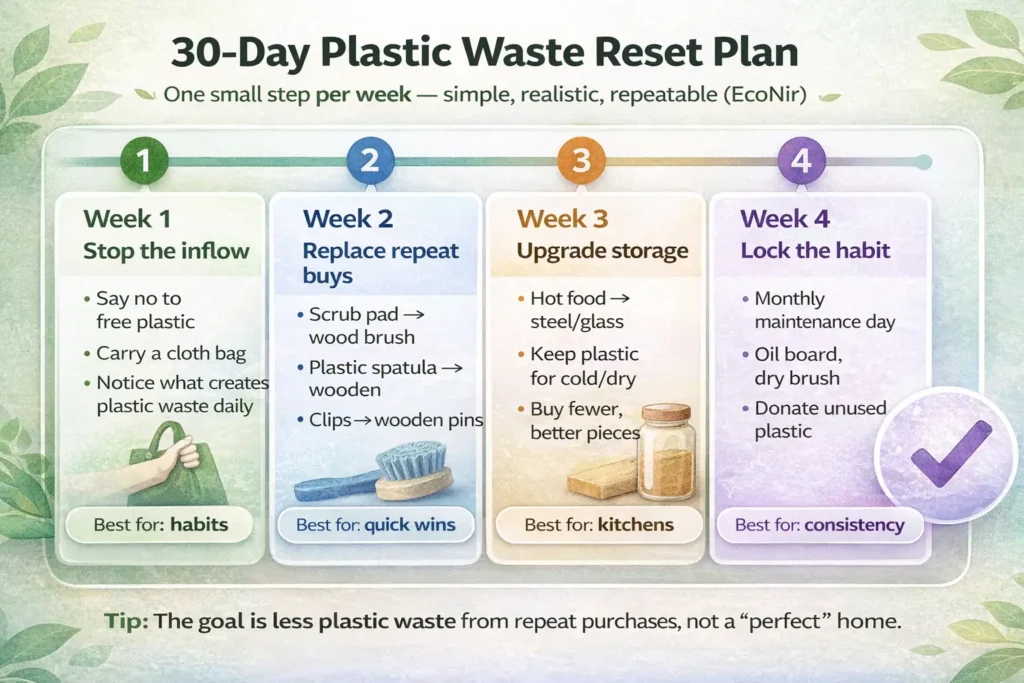
2) I switched the easiest items first
The fastest reduction in plastic waste came from replacing items that are thrown away often.
3) I tracked plastic waste in a simple way
No complicated audit just two checks:
- How often did my dry waste bag fill up?
- What plastic items did I throw away because they broke?
This made my plastic waste patterns obvious.
The wooden swaps that reduced plastic waste the most
These were the “high-impact, low-drama” changes that reduced plastic waste in my home.
✅ 1) Plastic scrubbers → Wooden dish brush + natural scrub
Scrub pads are sneaky: they wear out fast, so they create constant plastic waste.
✅ 2) Plastic spatulas → Wooden spatulas
Cheap plastic utensils warped near heat. Wooden tools lasted longer, so plastic waste reduced naturally.
✅ 3) Plastic clips → Wooden clothespins
Small item, big difference. Broken clips were regular plastic waste for us.
✅ 4) Plastic chopping board → Thicker wooden board (with care)
This swap reduced plastic waste mainly because the board lasted longer (with drying + occasional oiling).
What I did NOT replace with wood (important for real-life sustainability)
To reduce plastic waste responsibly, I didn’t force wood everywhere.
For hot/oily/acidic foods, I prefer:
- stainless steel or glass storage (better for heat + longevity)
Wood is best for tools, boards, brushes, and organizers—not for storing hot curry.
EcoNir guide: Wood vs Plastic – Which Is Better for Health & Environment?
My simple “Plastic Waste Reduction” swap table
| Area | What created plastic waste | What I switched to | Why plastic waste reduced |
|---|---|---|---|
| Kitchen | Plastic spatulas | Wooden spatula | Less warping + fewer replacements |
| Kitchen | Plastic board | Thick wooden board | Longer life = less plastic waste |
| Cleaning | Plastic scrub pads | Wooden brush + coir | Reusable + slower disposal |
| Laundry | Plastic clips | Wooden clothespins | Stronger + repairable |
| Bathroom | Cheap plastic comb | Wooden comb | Doesn’t snap easily |
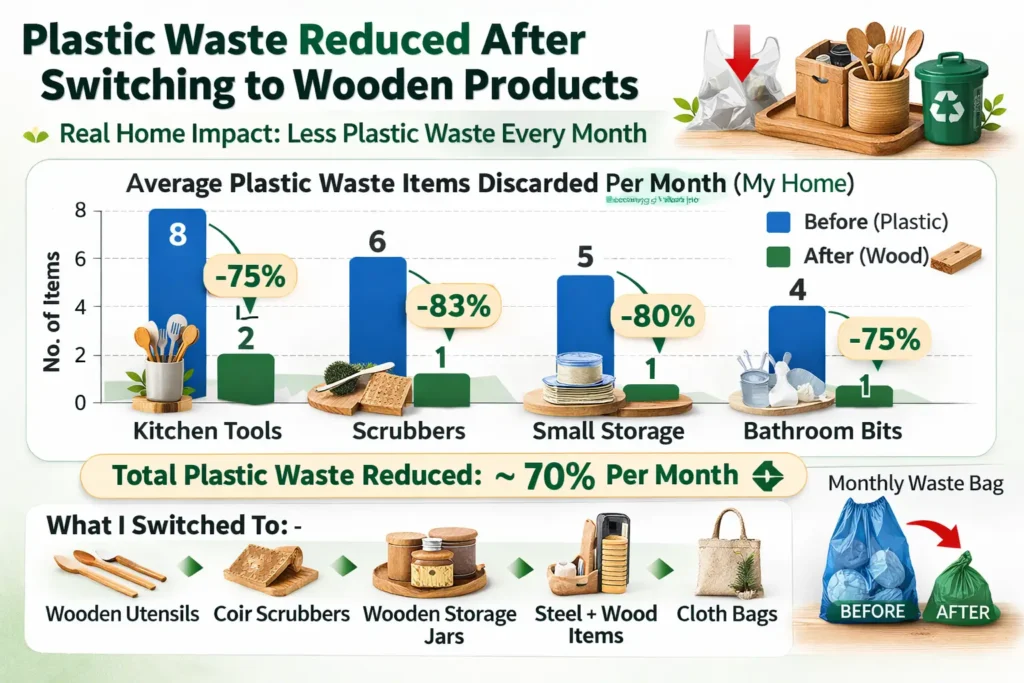
Results: how much plastic waste actually reduced?
The biggest shift wasn’t “wood looks nicer.” The biggest shift was:
I stopped buying replacements every few months – so my plastic waste dropped.
Even a small switch can reduce plastic waste because it cuts repeat purchases.
What I learned (so your plastic waste reduces faster)
1) “Wooden” doesn’t always mean sustainable
Some bamboo/wood items are heavily coated or glue-heavy. This EcoNir post helps you avoid bad buys:
EcoNir: Are Bamboo & Wooden Products Really Sustainable? Truth Explained
2) Certifications help (especially for wood)
If you’re buying bigger wooden items, certifications reduce risk of irresponsible sourcing.
FSC certification: how responsible wood sourcing works
3) Drying is the “secret habit”
Wood lasts longer when fully dried – longer life = less plastic waste from replacements.
Plastic Waste Management Rules: What Every Household Should Know
Reducing plastic waste at home is not just a personal lifestyle choice — it is also supported by official plastic waste management rules designed to protect the environment.
In India, the government introduced the Plastic Waste Management Rules to reduce plastic pollution and promote responsible disposal. These rules were first notified in 2016 and later strengthened through amendments in 2018, 2021, and 2022.
Here’s what these rules mean for households like ours:
1️⃣ Segregation at Source
Every household is encouraged to separate plastic waste from wet and dry waste. Proper segregation makes recycling easier and prevents plastic from ending up in landfills or water bodies.
2️⃣ Ban on Single-Use Plastics
Under amendments aligned with the Ministry of Environment, Forest and Climate Change, several single-use plastic items (like plastic cutlery, straws, and certain packaging materials) have been banned. This pushes consumers toward sustainable alternatives like wood, metal, or bamboo.
3️⃣ Extended Producer Responsibility (EPR)
Manufacturers and brand owners are now responsible for collecting and managing the plastic waste generated from their products. This system ensures companies take accountability instead of leaving the burden entirely on consumers.
4️⃣ Recycling and Reuse Focus
The rules promote recycling, compostable plastics (where applicable), and eco-friendly substitutes. Choosing durable wooden products supports this system because they last longer and reduce dependency on disposable plastic.
Why These Rules Matter for Your Home
Understanding plastic waste management rules changed how I looked at everyday products. When I realized how much plastic waste was restricted or regulated, switching to wooden alternatives felt like aligning my home with a bigger environmental movement.
Reducing plastic waste isn’t just about following rules — it’s about creating a cleaner, healthier living space while supporting national sustainability efforts.
small swaps, real plastic waste reduction
Switching to wooden products didn’t make my home perfect – but it made my home less disposable. The real reason my plastic waste reduced was simple: fewer broken items, fewer repeat purchases, and fewer “temporary” fixes.
If you want to reduce plastic waste without feeling overwhelmed, start with one area:
scrubbers → utensils → clips → organizers.
One swap at a time is still progress.
FAQs
1) Do wooden products really reduce plastic waste?
Yes, especially if they replace items you frequently throw away (scrubbers, cheap tools, clips). The key is durability and using them long-term.
2) Which wooden swaps make the biggest difference?
In most homes: dish brush + natural scrubbers, wooden spatulas, and a good cutting board reduce repeat plastic buying.
3) Are wooden utensils hygienic for Indian cooking?
They can be, if washed and fully dried. Avoid long soaking and store in a dry place.
4) Can I store curry or dal in wooden containers?
No, use steel or glass for hot/oily/acidic foods. Wood is better for tools and dry-use items.
5) How do I avoid “fake eco” wooden products?
Look for clear sourcing, avoid strong chemical smell, prefer minimal coatings, and check FSC/PEFC where possible.
6) What if termites or humidity are common where I live?
Choose dense, well-finished wood for home organizers, keep items dry, and don’t store wooden pieces in damp cabinets.