
In Indian homes, the “wood vs plastic” debate shows up everywhere – cutting boards, kitchen spoons, storage containers, kids’ toys, furniture, even puja items and disposables. Plastic feels easy and budget-friendly. Wood feels natural and traditional. But when you look closely, the better choice depends on health, environment, and how you actually use the item.
Let’s break it down in a simple way – without fear – mongering and without “perfect” claims – so you can choose what’s genuinely better for your home and the planet.
Table of Contents
Quick answer
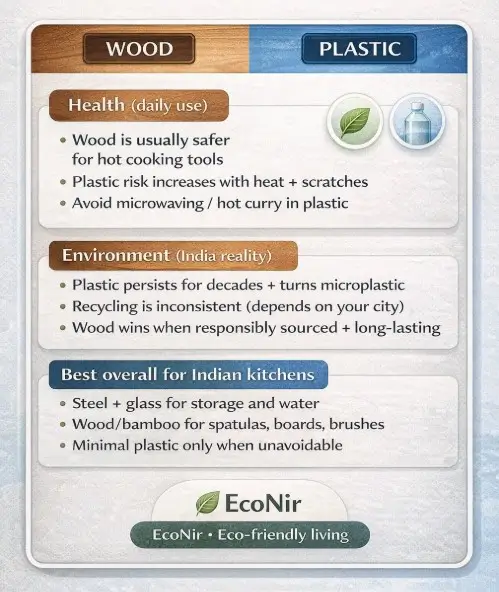
- For the environment: wood usually wins if it’s responsibly sourced and used long-term. Plastic creates long-lasting pollution, and recycling in India is still limited and inconsistent.
- For health (especially food contact): wood is often the safer daily choice for hot-use cooking tools, while plastic can be okay for cold storage if it’s truly food-grade and not heated.
- Best overall option for Indian kitchens: a smart mix—steel + glass for storage and water, wood/bamboo for some utensils, and minimal plastic where unavoidable.
Why this comparison isn’t as simple as it looks
“Wood” and “plastic” are not single materials-they are categories.
- A cheap wooden product coated in strong varnish isn’t automatically healthy.
- A high-quality food-grade plastic container used only for dry snacks is not the same as microwaving a plastic box daily.
A good comparison looks at the whole life cycle:
- raw materials
- manufacturing
- transport
- daily use (heat, wear, washing)
- end-of-life (recycling, landfill, composting, pollution risk)
1) Health comparison: Wood vs Plastic in daily life
Plastic and health: what Indians should watch for
Plastic concerns usually come from two areas:
A) Chemical leaching (especially with heat)
Some plastics may release chemicals into food when:
- used with hot curries/gravies
- kept in a hot car/dabba
- washed repeatedly in very hot water
- used for oil-rich foods (oil can increase migration of certain chemicals)
Many people search “BPA free plastic India” thinking it solves everything. But “BPA-free” doesn’t always mean chemical-free it may contain alternative additives that aren’t well understood by consumers.
You can also reference India’s food safety body: FSSAI (helpful for understanding how food-contact materials are regulated).
B) Microplastics (from wear and scratches)
Microplastics are tiny plastic particles released when plastic ages, scratches, or breaks down. This becomes more relevant for:
- old, cloudy food containers
- heavily scratched plastic cutting boards
- low-quality plastic bottles used for months
For a broader evidence-based overview, see: WHO report on microplastics in drinking-water.
Practical tip (no panic): If you use plastic, reduce exposure by avoiding heat + replacing worn-out pieces.
For a deeper comparison focused purely on materials and daily usability, read Why Wooden Products Are Better Than Plastic? where we break down durability, safety, and sustainability in detail.
Is wood hygienic and safe for food?
A common worry is: “Wood absorbs water – won’t it trap bacteria?”
Wood can be safe and hygienic if used properly:
- Wash with mild soap, rinse, and dry immediately
- Don’t leave it soaking in the sink
- For cutting boards: oil occasionally with food-safe mineral oil or a board oil blend
Also, wood doesn’t shed microplastics into food the way plastic boards can.
When wood is NOT safe:
If it’s constantly damp, growing mold, or coated with unknown chemical finishes (especially cheap painted items).
2) Environmental impact: which one is greener in India?
Plastic: long-lasting pollution + difficult recycling reality
Plastic’s biggest environmental problem isn’t only production—it’s what happens after use.
In India, plastic waste challenges include:
- mixed waste collection and contamination
- thin multi-layer packaging (chips packets, sachets) that’s hard to recycle
- litter entering rivers and eventually oceans
- open burning in some places (to “reduce” waste), which is harmful
India has rules to manage plastic waste, including EPR (Extended Producer Responsibility). You can explore official context via the Central Pollution Control Board: CPCB – Plastic Waste Management.
Also, single-use plastic restrictions exist, but availability and enforcement vary by state and city. (So the most reliable solution is still: refuse + reuse.)
Bottom line: Even when plastic is “recyclable,” it may not actually get recycled, and it can persist in the environment for decades.
Wood: renewable—if sourced responsibly
Wood can be a climate-friendly material because trees store carbon while growing. But wood becomes “eco-friendly” only when:
- forests are managed sustainably
- products are durable and long-lasting
- harvesting doesn’t contribute to biodiversity loss
For better sourcing, look for FSC certification where possible: Forest Stewardship Council (FSC).
India-specific reality: Many wooden items in local markets don’t clearly mention sourcing. So your best eco move is often:
- buy less
- buy durable pieces
- repair/maintain wood instead of replacing quickly
3) Durability and waste: the hidden factor most people miss
Sustainability isn’t only “material.” It’s also how long you keep it.
- A cheap plastic item used for 2 months and discarded is high waste.
- A solid wooden board used for 5-10 years is low waste.
- A steel dabba used for 15 years beats both.
EcoNir rule: The most eco-friendly product is usually the one you already own – f it’s safe and functional.
Small sustainable swaps can also reduce expenses. Discover 10 Eco-Friendly Habits That Can Save ₹50,000 a Year in India to make your home greener and more budget-friendly.
4) Best choices for common Indian household items (practical guide)
A) Cutting board: wooden vs plastic cutting board
Wooden cutting board (good quality hardwood):
- gentler on knives
- doesn’t create microplastics
- can be sanded and restored
- needs drying + occasional oiling
Plastic cutting board:
- easy to wash
- but deep knife grooves can trap residue
- may shed microplastics over time
- should be replaced more often
Best approach for Indian kitchens:
- Use one good wooden board for vegetables/roti items
- If you handle raw meat/fish, keep a separate dedicated board, and replace when it gets heavily grooved
B) Cooking utensils (spatulas, ladles, spoons)
Wooden spatula/spoon:
- excellent for hot cooking
- lower risk of chemical leaching
- needs drying to prevent cracking/mold
Plastic spoon/spatula:
- can soften or degrade with heat
- not ideal for high-heat tadka and frying
Better alternatives popular in India:
- stainless steel ladles
- wooden spatulas for non-stick use
- silicone (good quality) can be okay, but choose reputable brands
If you’re looking for durable, thoughtfully designed alternatives, explore our curated EcoNir Eco-Product Shop featuring sustainable wooden and low-waste home essentials.
C) Food storage (dabba) and leftovers
Plastic containers:
- okay for dry snacks if they’re in good condition
- avoid pouring very hot food directly
- don’t microwave in plastic (if possible)
Best for Indian leftovers:
- glass containers (great for curries, dal, sabzi)
- stainless steel tiffins (classic, durable, widely available)
D) Water bottles
Plastic bottles are common for school/office because they’re lightweight, but they age fast and get scratched.
Better options:
- stainless steel bottle (most durable)
- glass for home use
If you buy plastic: look for reputable food-grade bottles and replace when worn.
E) Disposables: plates, cutlery, cups
If your goal is eco-friendly living in India, disposables are where you can make a big difference.
Instead of plastic disposables, consider:
- steel for home events (renting steel plates is common and eco-smart)
- areca leaf plates, paper where appropriate
- cloth napkins instead of tissues
If you’re redesigning your space sustainably, explore our guide on Eco-Friendly Home Décor Ideas for Indian Homes for practical and aesthetic upgrades that reduce environmental impact.
5) Recycling and end-of-life: what happens after you’re done?
Wood end-of-life
Untreated wood is biodegradable, but most household wooden items are mixed with:
- glue (engineered wood)
- paint/varnish
- food oils and stains
So instead of assuming it will “compost,” focus on:
- reuse (repurpose old wood)
- repair
- safe disposal based on local rules
Plastic end-of-life
Plastic recycling depends heavily on:
- your city’s collection system
- sorting quality
- type of plastic (some types are rarely recycled)
6) High-search checklist: how to choose safer, greener products (India)
When WOOD is the better buy
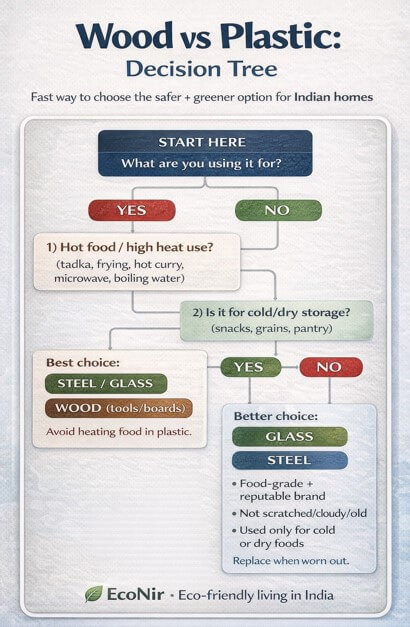
Choose wood if:
- it’s a long-life item (cutting board, rolling pin, spatula, scrub brush)
- it’s untreated or finished with food-safe oil/wax
- you can keep it dry between uses
Bonus India tip: Prefer sturdy hardwood-style products (sheesham/teak/acacia type) for boards, and avoid overly soft, splintery wood for heavy kitchen use.
When PLASTIC is acceptable (use smartly)
Plastic can be okay when:
- it’s used cold (dry snacks, pantry storage)
- it’s not scratched or cloudy
- it’s clearly labeled food-grade from a reputable brand
- you avoid heat + oil-heavy hot storage
When NEITHER is best (choose alternatives)
Go for stainless steel or glass when:
- you store hot curries daily
- you pack lunch/tiffin regularly
- you want a long-term, lowest-waste choice
FAQs
1. Is wood better than plastic for health?
For many kitchen uses-especially hot cooking—wood is often a safer daily choice than plastic because it doesn’t leach chemicals due to heat and doesn’t shed microplastics. But it must be cleaned and dried properly.
2. Is wood better than plastic for health?
In most real-world cases, yes—because plastic persists for a long time, can turn into microplastics, and recycling systems don’t capture everything. Wood can be eco-friendly if it’s sustainably sourced and used for years.
3. What’s the most eco-friendly material overall?
For Indian kitchens, the most sustainable winners are usually stainless steel and glass, supported by a few good wooden tools. And the biggest eco step is reducing single-use items.
Final verdict: What should you choose?
If you’re choosing between wood and plastic in India:
- Pick wood for cooking tools and boards (durable, low microplastic risk, traditional and practical).
- Reduce plastic in heat and food contact, especially for hot leftovers and microwaving.
- For the best long-term eco choice, build your basics around steel and glass, and buy fewer, better items.
If you want a complete roadmap beyond just wood vs plastic, explore our Sustainable Living Guide for Indian Families for realistic, long-term eco habits.