
A zero-waste lifestyle is not about producing zero trash overnight. It’s a mindset and a set of habits designed to prevent waste before it’s created—so fewer resources are extracted, fewer products are manufactured unnecessarily, and less ends up in landfills or incinerators.
If you’ve ever felt overwhelmed by sustainability advice, this guide is designed for real life: small homes, busy schedules, families, budgets, and imperfect routines. You’ll get a simple action plan, a waste audit chart, and an infographic you can add to your EcoNir blog.
Table of Contents
What is a zero-waste lifestyle?
A zero-waste lifestyle is a practical approach to living that aims to reduce waste at the source by changing how we buy, use, reuse, repair, and dispose of items.
It’s closely connected to the idea of a circular economy, where materials are kept in use for as long as possible, instead of becoming trash after one use. (For a deeper explanation, see this overview of the circular economy from the Ellen MacArthur Foundation: circular economy introduction.)
Zero-waste is not:
- Buying a whole new set of “eco” products
- Feeling guilty every time you throw something away
- Doing everything perfectly
Zero-waste is:
- Preventing waste before it enters your home
- Using what you already have
- Choosing the lowest-waste option that fits your life
Why zero-waste matters (benefits you’ll actually notice)
A zero-waste lifestyle helps the planet—but it also tends to improve daily life in ways that are easy to feel:
- Less clutter: fewer “mystery items” and single-use extras
- Lower costs over time: refillables + reusables typically win long-term
- Simpler shopping: you buy with intention, not habit
- Cleaner routines: fewer disposable items piling up
- Better food management: less spoilage, more planned meals
If you’re new to the basics, the U.S. EPA has a solid intro on prevention-first habits: Reducing and reusing basics.
The Zero-Waste 5 Rules (the framework that makes it easy)
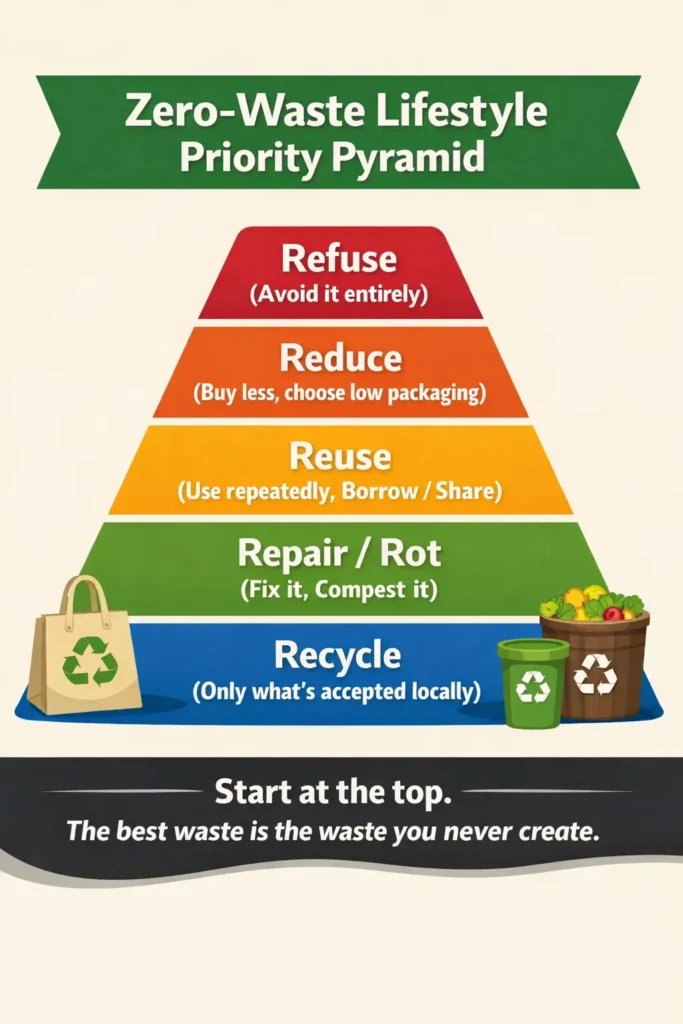
When people try a zero-waste lifestyle, they often start with recycling. Recycling helps, but it’s not the first step. The most effective approach is the 5Rs:
1) Refuse
Say no to what you don’t need:
- Free promotional items
- Extra cutlery/napkins
- Unnecessary packaging upgrades
2) Reduce
Buy less and choose simpler:
- Fewer duplicates (especially kitchen gadgets)
- Multi-purpose items
- Digital receipts/bills
3) Reuse
Replace disposables with reusables:
- Water bottle
- Coffee cup
- Lunchbox
4) Repair / Rot
- Repair clothing, small appliances, bags
- Rot = compost what’s compostable
5) Recycle (last)
Recycle what you truly can—correctly—based on local rules.
Start here: do a simple home waste audit (chart included)
Before buying anything “eco,” do a 7-day waste audit. This reveals the real sources of your trash so you can focus on what matters.
7-Day Waste Audit Chart (copy into your notes)
Track what you throw away for one week:
| Category | Example Items | Count (7 days) | Why it happens | Better Option |
|---|---|---|---|---|
| Food packaging | snack wrappers, pouches | convenience snacks | bulk snacks, homemade | |
| Takeout waste | cups, lids, containers | last-minute meals | bring container, cook 2x | |
| Paper | tissues, paper towels | cleaning habits | cloths, washable towels | |
| Bathroom | shampoo bottles, razors | single-use products | refill/solid options | |
| Delivery | boxes, bubble mailers | online shopping | bundle orders, local buy | |
| “Other” | mixed plastics | impulse buys | 24-hour rule |
Goal: Identify your top 2 categories. Those will give you the biggest reduction quickly.
High-impact zero-waste swaps by room (kitchen, bathroom, on-the-go)
You don’t need 30 swaps. You need the right 5–10 based on your audit.
Kitchen (biggest waste zone for most homes)
Start with these:
- Cloth towels instead of paper towels (keep a small “used cloth” basket)
- Reusable food containers instead of cling wrap (use what you already own)
- Loose produce bags (or skip bags for sturdy produce)
- Refillable dish soap if available locally
- Keep a “leftovers night” weekly to prevent food waste
Shopping tip: If you’re aiming for plastic-free, look for refill stores, bulk bins, or products packaged in paper, glass, or aluminum.
Many families are switching to eco-friendly wooden kitchen products that are durable and biodegradable.
You can explore practical sustainable swaps here:
👉 EcoNir
These small changes significantly reduce daily plastic waste.
Bathroom
Low-effort changes that stick:
- Refillable hand soap (one dispenser + refills)
- Safety razor or razor with replaceable blades (if it suits you)
- Bar soap / shampoo bars (works well for many hair types; try one brand first)
- Washable cloths instead of disposable wipes
On-the-go (where “surprise waste” happens)
Create a small “zero-waste kit”:
- Water bottle
- Small container (for snacks or leftovers)
- Reusable cutlery (optional)
- Cloth napkin
If you want a global challenge format for reducing single-use plastics, Plastic Free July offers practical ideas and community momentum: Plastic Free July challenge.
Quick-Reference Table: Common Trash → Zero-Waste Alternatives
| Common Waste Item | Better Swap | Cost Notes | Beginner Friendly? |
|---|---|---|---|
| Plastic water bottles | Refillable bottle | saves money fast | Yes |
| Paper towels | Cloth towels/rags | use old t-shirts | Yes |
| Zip bags | Reusable containers | repurpose jars | Yes |
| Coffee cups | Bring-your-own mug | depends on routine | Yes |
| Snack wrappers | Bulk snacks + jar | small habit shift | Medium |
| Sponges | Compostable sponge/cloth | varies by area | Medium |
| Shampoo bottles | Refill/solid shampoo | try one at a time | Medium |
Food waste: the fastest way to shrink your trash
If your trash smells bad, food waste is usually the reason. Reducing food waste also lowers your weekly spending and makes your kitchen feel easier to manage.
Practical food-waste habits that work
- Plan 3–4 core meals, not 14 perfect meals
- Keep a “use-first” box in the fridge for items that must be eaten soon
- Freeze leftovers immediately if you won’t eat them in 24 hours
- Learn 2 rescue meals: soup, fried rice, pasta, stir-fry
For data and strategies, WRAP has excellent resources on preventing food waste: WRAP food waste reduction.
Composting basics (without the mess)
Composting is powerful-but only if it’s manageable. The best compost system is the one you’ll actually maintain.
Composting options (choose one)
- Backyard compost (best if you have outdoor space)
- Compost tumbler (faster, less pest risk)
- Vermicomposting (worms) (great for apartments if you’re willing)
- Municipal organics pickup (easy if your city provides it)
- Drop-off composting (farmers markets sometimes have this)
These Eco Alternatives Are Taking Over Indian Homes – Read Here
Recycling: how to avoid “wish-cycling”
Recycling only works when materials are sorted correctly. A major problem is wish-cycling-putting items in the recycling bin hoping they’ll be recycled.
Rules of thumb (verify with your local program)
- No food residue (rinse if needed)
- No plastic bags in curbside recycling (they jam equipment)
- Follow your city’s accepted materials list
According to the Central Pollution Control Board waste management report, organic waste forms a major portion of municipal solid waste in India.
A realistic 30-day zero-waste challenge (plan + checklist)
This is designed to avoid burnout and avoid buying a cart full of “eco stuff.”
30-Day Plan (weekly focus)
| Week | Focus | Actions |
|---|---|---|
| Week 1 | Awareness | 7-day waste audit + identify top 2 waste categories |
| Week 2 | Kitchen wins | cloth towels, leftover system, water bottle, 1 bulk/refill habit |
| Week 3 | Bathroom + on-the-go | refillable soap, one swap (razor or bar), carry kit |
| Week 4 | Systems | compost option + recycling rules + reduce delivery packaging |
Printable checklist (copy/paste)
- I tracked my trash for 7 days
- I chose my top 2 waste categories
- I replaced one disposable with a reusable I already own
- I set a “leftovers night” each week
- I learned my local recycling rules (no guessing)
- I chose a compost method that fits my home
- I made a small “on-the-go kit”
Common mistakes (and what to do instead)
Mistake 1: Buying new products to “go zero waste”
Instead: Use what you have, then replace only when something is finished.
Mistake 2: Making recycling the main strategy
Instead: Prioritize refuse and reduce, then reuse.
Mistake 3: Trying to do everything at once
Instead: Change one habit per week so it becomes automatic.
Mistake 4: Feeling guilty about unavoidable waste
Instead: Focus on trends, not perfection. Your direction matters more than your “zero.”
FAQs
1. Is a zero-waste lifestyle expensive?
It can be cheaper long-term because you buy fewer disposable items. The lowest-cost approach is: use what you already own, then replace items only as they wear out.
2. Do I need a mason jar pantry to be zero-waste?
No. A zero-waste lifestyle is about reducing what you send to landfill, not creating a perfect aesthetic.
3. What if my area doesn’t have good recycling or composting?
Then your best leverage is refuse + reduce. Choose items with less packaging, buy secondhand, and focus on reusables that actually replace disposables in your routine.
4. What’s the easiest first step?
Do a 7-day waste audit and fix your top 2 sources of trash. Most people see quick wins in food waste and paper towel/tissue use.
Start small, but start at the top of the pyramid
A zero-waste lifestyle becomes easy when it stops being a project and starts being a set of defaults: refuse what you don’t need, reduce what you bring home, reuse what you already have, compost what you can, and recycle correctly.
If you do only one thing today: run the 7-day waste audit. Your trash will tell you exactly what to change next.